BY JP PAUL
www.proximitycouncil.com
AUGUST 6, 2026
If you rewind a few years, "sustainability" was a luxury reserved for Fortune 500 companies. It meant glossy ESG reports, carbon offset credits, and marketing campaigns designed to make consumers feel good.
If you were running a $15 million manufacturing plant or a regional logistics firm, you likely ignored it. You didn't have the budget for "vanity projects." Your focus was on making payroll, hitting production targets, and defending your margins.
But in 2026, the narrative has fundamentally changed.
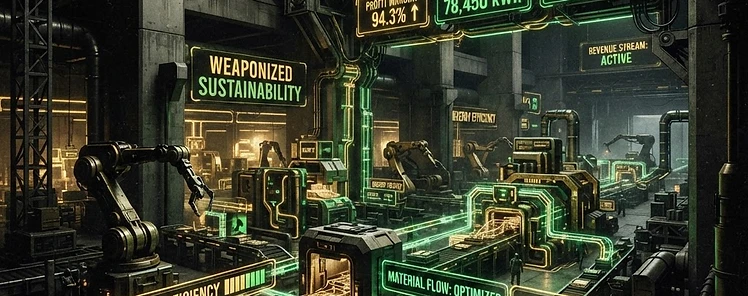
The era of sustainability as a corporate branding exercise is over. Today, it is a ruthless, pragmatic cost-reduction strategy. In a high-inflation, high-cost environment, the companies that are leaning into "eco-practices" aren't doing it to save the planet, they are doing it to save their P&L.
Here is how smart mid-market CEOs are using sustainability to aggressively protect their margins.
The Shift: "Green" Now Means Cash Flow
To understand the shift, you have to look at your primary operational expenses: energy, raw materials, and waste disposal.
As we've seen with the recent power grid instability and volatile global supply chains, the cost of simply keeping the lights on and the machines running has skyrocketed. Every kilowatt of wasted energy and every pound of scrapped material is cash burning on the factory floor.
When you reframe "sustainability" as "extreme operational efficiency," it suddenly becomes the most important conversation in your boardroom.
Here are the three levers mid-market operators are pulling right now to turn eco-practices into profit:
Ruthless Energy Efficiency
With commercial electricity rates climbing and regional grids facing unprecedented strain from AI data centers, energy is no longer a fixed cost you just accept. It is a variable you must control. Smart facility managers are treating energy waste like theft. They are moving beyond basic LED retrofits and installing smart, IoT-enabled HVAC systems that dial down power usage during peak billing hours. For heavier operations, investing in solar-plus-storage microgrids is no longer a green pipe dream; it is an immediate hedge against grid outages and spiking wholesale power costs.
Supply Chain Waste Eradication
In traditional manufacturing and e-commerce, a shocking amount of margin is lost to packaging and material scrap. "Lean manufacturing" is the original sustainability program. Today's most profitable companies are auditing their dumpsters. If you are paying for raw materials, paying to process them, and then paying a waste management company to haul away the off-cuts, you are bleeding money three times. Operators are redesigning products to use less material, demanding reduced packaging from their own vendors, and finding secondary markets to sell their manufacturing byproducts instead of paying to trash them.
The Lifecycle Pivot
The old model was "take, make, dispose." The new, profitable model focuses on equipment lifecycle. Instead of constantly buying new, cheap fleet vehicles or warehouse machinery that breaks down in three years (and requires constant parts replacement), companies are investing in modular, repairable assets. Extending the lifespan of your heavy equipment by 30% through predictive maintenance and better engineering drastically reduces your capital expenditures over a decade.
The Bottom Line
Don't let the word "sustainability" trick you into thinking this is a soft HR or marketing topic.
The businesses that thrive over the next 36 months will not be the ones waving the biggest green flags on their websites. They will be the ones that engineered the most efficient, waste-free operations in their industry.
Stop looking at eco-practices as a tax on your business. Start looking at them as the ultimate tool to trim the fat, lower your baseline costs, and build a financially bulletproof company.
[READY TO ENGINEER EFFICIENCY?]
The Proximity Council gives you the frameworks, accountability, and peer-level perspective to build waste-free operations that protect your margins.
EXPLORE THE PROXIMITY JOURNEY